Halal Beef Brisket: The Ultimate Low & Slow Recipe
The Cut That Demands Respect — and Repays It Tenfold
Brisket is not a forgiving cut. Rush it and you'll end up with something closer to boot leather than the trembling, pull-apart beef that's been turning heads at garden gatherings and Eid tables across Manchester for the past few years. But treat it with patience — low heat, time, and a decent rub — and it becomes one of the most spectacular things you can put in front of people.
The good news? Halal beef brisket is genuinely easy to source in Greater Manchester. The even better news: this recipe works every single time, provided you follow the process. No shortcuts. No foil tents at the last minute because you're impatient. Commit to the low and slow method and you'll be rewarded.
Buying Your Brisket: What to Ask Your Butcher
Start with the right piece of meat and everything else follows. Brisket comes from the lower chest of the cow and is made up of two muscles: the flat (leaner, more uniform) and the point (fattier, more flavourful). If you can, ask for the full packer brisket — both muscles together, untrimmed. This is what pitmasters use, and the fat cap is essential for a low and slow cook.
In Manchester, you're spoilt for choice. Longsight Market has several halal butchers who carry beef brisket regularly — ask specifically for the point-end if you want maximum flavour, or the flat if you're slicing for sandwiches. Cheetham Hill is another brilliant destination, particularly along Cheetham Hill Road, where you'll find butchers stocking grass-fed and grain-fed halal beef from suppliers that cater to the South Asian and Middle Eastern communities. Don't be afraid to ring ahead and order a larger joint — anything between 2kg and 4kg is ideal for this recipe.
When it comes to certification, look for HMC (Halal Monitoring Committee) certified butchers wherever possible. HMC operates to one of the strictest halal standards in the UK, requiring hand-slaughter and full traceability. If you're unsure which local shops carry certified stock, Zaveato lists verified halal butchers and suppliers across Greater Manchester, so you can shop with confidence before you even leave the house.
The Rub: Building Flavour Before the Oven Even Switches On
A proper dry rub applied the night before does more work than most people realise. It draws moisture to the surface, creates a crust (called the bark) during cooking, and seasons the meat all the way through. This isn't optional — it's the foundation of a great brisket.
The spice blend below leans into warm, smoky flavours that complement beef without overwhelming it. It works equally well whether you're cooking in the oven or on a low barbecue.
Ingredients
- 2.5–3.5kg halal beef brisket (flat or point, fat cap on)
- 2 tbsp coarse sea salt
- 2 tbsp dark brown sugar
- 1 tbsp smoked paprika
- 1 tbsp ground cumin
- 1 tsp ground coriander
- 1 tsp garlic granules
- 1 tsp onion granules
- 1 tsp coarsely ground black pepper
- ½ tsp cayenne pepper (adjust to taste)
- ½ tsp ground cinnamon
- 3 tbsp neutral oil (such as sunflower or vegetable)
- 250ml halal beef stock
- 2 tbsp Worcestershire sauce (check label for halal compliance — several UK brands are suitable)
- 1 large white onion, roughly sliced
- 4 garlic cloves, bashed
- 2 sprigs of fresh thyme
Method
- The night before: Pat your brisket completely dry with kitchen paper. Mix all the dry rub ingredients together and work the oil into the meat first, then press the rub firmly all over every surface — don't be shy. Wrap tightly in cling film or place in a large zip-lock bag and refrigerate overnight. Minimum 8 hours; 16–24 hours is even better.
- Two hours before cooking: Remove the brisket from the fridge and allow it to come to room temperature. This is non-negotiable — cold meat in a hot oven leads to uneven cooking.
- Preheat your oven to 150°C fan (170°C conventional). You want a steady, gentle heat.
- Sear the meat: Heat a large, heavy-based roasting tin or cast iron casserole dish on the hob over a high flame. Add a little oil and sear the brisket fat-side down first for 4–5 minutes until a dark crust forms, then turn and sear all remaining sides for 2–3 minutes each. This step is about building flavour through the Maillard reaction — don't skip it.
- Build your braising base: Remove the brisket briefly and scatter the sliced onion, bashed garlic, and thyme into the base of the tin. Pour in the beef stock and Worcestershire sauce. Return the brisket to the tin, fat-side up — always fat-side up, so the fat renders down through the meat as it cooks.
- Cover tightly with a double layer of foil, crimped firmly around the edges, then place the lid on top if your dish has one. The aim is to trap all the moisture and steam.
- Cook low and slow: Place in the oven for 5–6 hours for a 2.5kg joint, up to 7–8 hours for anything closer to 4kg. You are looking for an internal temperature of 93–96°C — this is the zone where the tough connective tissue (collagen) fully converts to gelatin, giving you that signature melt-apart texture. A digital probe thermometer is the single most useful tool you can own for this recipe.
- Check the liquid halfway through. If the braising liquid has reduced too much, add a splash more stock or just hot water. You want roughly 1–2cm of liquid in the base throughout.
- Rest — properly: When the brisket reaches temperature, remove from the oven but keep it wrapped and rested for a minimum of 45 minutes. An hour is better. This step is where much of the moisture redistributes back through the meat. Cut into it immediately and you'll lose half the juice to your chopping board.
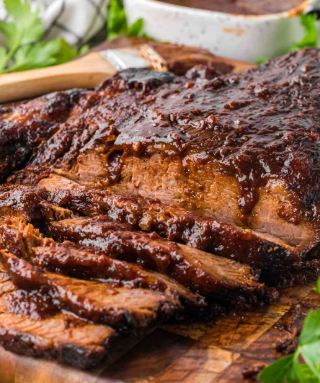
- Serve: Slice against the grain for maximum tenderness, or pull it apart with two forks if it's gloriously soft enough. Strain the braising juices, skim the fat, and reduce briefly on the hob for a rich, intensely savoury jus to serve alongside.
How to Serve It: From Weeknight Plates to Eid Spreads
Sliced brisket works beautifully with roasted potatoes and a sharp, mustardy slaw. Pull it apart and pile it into toasted brioche rolls with pickled red onion for something that'll disappear from the table in minutes. For a more Middle Eastern angle, serve it over saffron rice with barberries and fried onions — the braising jus spooned over the top ties everything together.
Leftovers — if you have any — make outstanding sandwiches the next day, cold from the fridge, or warmed gently in a little of the saved jus. Brisket is arguably better on day two.
Practical Tips for Getting It Right
- Buy quality, certified halal beef. The flavour difference between a well-raised animal and a poor-quality one is significant in long cooks. Search local butchers on Zaveato to find HMC-certified options near you.
- Fat cap on, always. Don't ask your butcher to trim it — you want that fat layer rendering slowly over hours. You can remove it at the table.
- Low and slow means low and slow. If your oven runs hot, drop it to 140°C fan. Rushing the temperature up will tighten the meat before the collagen has broken down.
- Invest in a digital probe thermometer. Time is a guide; internal temperature is the truth. 93°C minimum, 96°C ideal.
- Don't open the foil repeatedly. Check once at the halfway point, then leave it alone.
- Plan around the rest time. Build at least an hour of resting into your schedule before serving.
"The secret to brisket is deciding the night before that you're going to be patient. Everything after that is just process."
Get the cut right, give it the time it deserves, and halal beef brisket will become a permanent fixture in your cooking rotation. From a quiet Sunday dinner in Didsbury to a full Eid feast table in Longsight, there are few things more satisfying to put in front of the people you're feeding.